
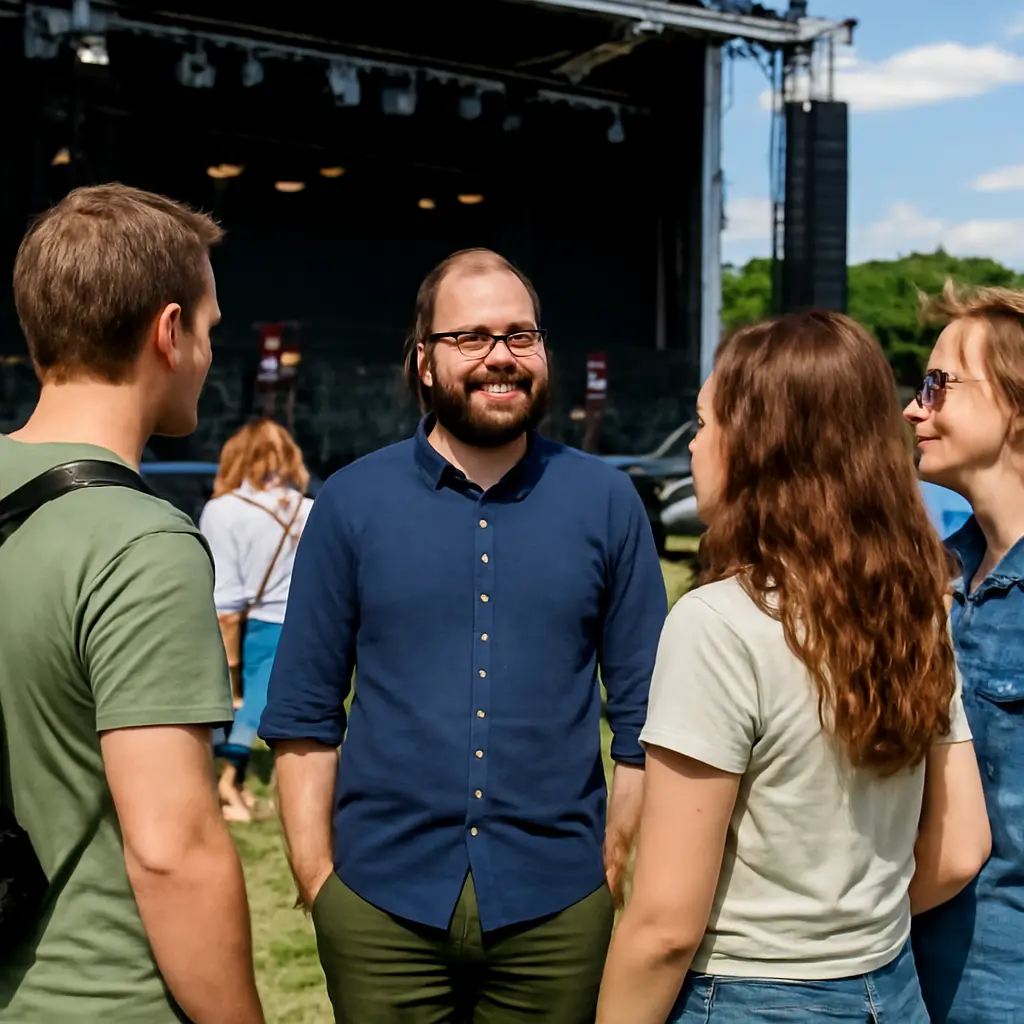
Music festivals build loyalty when they become more than events: they offer memorable experiences, a sense of belonging, and reasons to return. In psychology, festival loyalty is the continuing preference or intention to attend a particular festival, while community connection describes the social bonds and shared identity that attendees develop with other people and the event. Research on festivals and live experiences links satisfaction, emotional attachment, and perceived community to intentions to revisit and recommend. This article explains how those forces work, distinguishes key forms of loyalty and connection, and considers practical examples and evidence that organizers can use to strengthen both.
Festival Loyalty and Community Connection: Meaning and Psychological Foundations
Festival loyalty is not simply a record of repeat ticket purchases. It is a favorable, durable relationship with an event, expressed through behaviors such as returning, recommending it, following its news, or identifying with its culture. Community connection is the perceived bond among attendees and between attendees and a festival’s place, traditions, and organizers. These concepts overlap: a person may return because the music is excellent, but loyalty often deepens when the event also supports friendships, belonging, and a valued identity.
There is no single universal measure of festival loyalty or community connection. Researchers commonly assess loyalty through revisit intention, recommendation, and repeat attendance, while measuring connection through belonging, social interaction, shared identity, or attachment to place. The distinction matters because an intention to return is not the same as an actual return: ticket cost, travel, schedules, and lineup changes can intervene. A useful way to understand the relationship is to follow the path from experience, to emotional and social meaning, to future behavior.
Experiential satisfaction and perceived value
Experiential satisfaction is an attendee’s evaluation of whether the event met or exceeded expectations. It can reflect performances, sound, food, accessibility, safety, staff interactions, and how smoothly the festival is run. Perceived value is the attendee’s judgment of what the overall experience was worth relative to its price, time, and effort. Satisfaction is a strong foundation for loyalty, but value and practical convenience can determine whether positive feelings translate into another purchase.
A 2024 YouGov survey of U.S. music-festival attendees found that 42% said they had attended a music festival in the previous 12 months. YouGov also reported that live music and the atmosphere were among the leading motivations for attendance. These findings illustrate why organizers must deliver both the core product and the surrounding experience: a memorable performance can draw someone in, while clear logistics, fair pricing, and comfortable facilities help make a return feel worthwhile. The survey describes U.S. respondents and should not be treated as a global attendance estimate.
Emotional attachment and identity
Emotional attachment is the sense that a festival has personal meaning beyond its practical features. Attendees may associate it with a life stage, a friendship group, a musical subculture, or an annual tradition. In “The Psychology of Music Festivals,” researchers describe festivals as settings in which shared musical experience can help create social bonds and a feeling of collective participation. When people see an event as “their” festival, repeat attendance can become part of how they express who they are.
This connection is consistent with social identity theory, which explains how group membership can contribute to self-concept. Festival identity may be built through shared rituals, clothing, language, favorite performers, and memories of earlier editions. It does not mean every attendee feels equally included: a community can feel welcoming to some and inaccessible to others. Organizers therefore need to make belonging possible across differences in age, disability, income, background, and musical taste.
Behavioral, attitudinal, and advocacy loyalty
Behavioral loyalty means observable repeat attendance or purchasing. Attitudinal loyalty means a favorable preference or emotional commitment, even when a person cannot attend every year. Advocacy loyalty is the willingness to recommend the festival, share its content, or invite others. These forms can diverge: someone may attend repeatedly because of convenience without feeling attached, while a devoted fan may miss an edition because of cost or family commitments.
This distinction gives organizers a more accurate view than ticket sales alone. Repeat purchases show behavior, but surveys, referral activity, community participation, and attendee feedback reveal why people return. A festival can track these measures together, while protecting personal data and avoiding the assumption that online activity represents every member of its audience.
Community Connection Builds Festival Loyalty Through Shared Experience
Community connection describes the social and psychological ties that make a festival feel like a place where people belong. It can arise between friends who attend together, among strangers who share a performance, or between attendees and a local community. The concept includes more than crowd size: a large audience can remain socially anonymous, while a smaller event can create strong recognition and participation. Once attendees feel connected, the event can become a recurring social setting rather than a one-off entertainment purchase.
The bridge from satisfaction to community is often interaction. Music, dance, collective attention, and shared rituals create opportunities for people to experience emotion together. Research on collective gatherings suggests that synchronized activity and shared focus can strengthen feelings of affiliation. At festivals, these experiences may be especially vivid because people are physically present, responding to the same artists and atmosphere.
Social bonding and shared rituals
Social bonding is the development of trust, familiarity, and closeness through interaction. Festival rituals—such as meeting at a familiar stage, camping with friends, dressing for a theme, or returning to an annual gathering—give these bonds a repeatable structure. Friends can renew relationships, while newcomers may use shared enthusiasm as an easy starting point for conversation.
The University of Oxford’s research on mass gatherings and music has examined how collective participation relates to social connection and well-being. Such work supports the idea that shared attention and synchronized movement can be socially meaningful, though it does not prove that every festival experience produces lasting friendship. The quality of the environment matters: welcoming spaces and clear safety support can encourage interaction, while crowding, harassment, or exclusion can undermine it.
Place attachment and local identity
Place attachment is an emotional bond with a location, shaped by personal memories, social relationships, and the meaning assigned to the setting. A festival may become associated with a city, park, shoreline, or rural landscape. The event can then reinforce local identity and give visitors a reason to explore the surrounding area, while residents may see it as part of the community’s cultural calendar.
The relationship depends on how the event affects its host community. Local employment, partnerships with small businesses, accessible programming, and respectful stewardship can strengthen goodwill. Conversely, noise, congestion, environmental pressure, or rising costs can create conflict. Community connection therefore includes residents and workers, not only ticket holders; long-term loyalty is more sustainable when organizers listen to the people who live with the event’s impacts.
Belonging, inclusion, and psychological safety
Belonging is the feeling that one is accepted as a legitimate participant in a group. Psychological safety means people can take part, express themselves, and seek help without undue fear of humiliation or harm. At a festival, these conditions are shaped by accessible routes and facilities, staff training, clear conduct policies, safe transport, affordable options, and visible support for people experiencing harassment or distress.
Inclusion is both an ethical responsibility and a practical condition for a broad, durable community. The World Health Organization’s International Classification of Functioning, Disability and Health frames disability in relation to both individual circumstances and environmental barriers, a useful reminder that access is affected by event design. Organizers can assess inclusion through accessibility audits, attendee feedback, incident reporting, and participation patterns, rather than relying only on promotional claims.
Festival Loyalty Is Strengthened by Experience Design and Trust
Festival loyalty is shaped not only by what happens on stage but also by the decisions that determine whether attendees feel respected and confident. Experience design connects practical services to emotional outcomes: a well-run entry process can reduce stress, while helpful staff can signal that attendees matter. Trust, in turn, influences whether people are willing to commit money and time to a future edition before they know every detail.
Consistency, novelty, and expectation management
Consistency means delivering dependable essentials, such as accurate information, reliable schedules, clean facilities, and competent operations. Novelty means offering enough change to keep the event fresh, through new artists, spaces, food, or activities. A loyal audience often values both: familiar rituals create continuity, while new experiences provide a reason to return. Too much change can weaken identity; too little can make an event feel stagnant.
Clear expectation management is part of this balance. Organizers should communicate what has changed, what remains familiar, and what attendees can realistically expect. If a headliner cancels or weather disrupts programming, timely explanations and fair remedies can protect trust better than silence. Service-recovery research broadly finds that perceived fairness and responsiveness influence how customers judge failures, making post-incident communication an important part of a festival’s relationship with its audience.
Trust, safety, and responsible operations
Trust is confidence that an organizer will act competently, communicate honestly, and take attendee welfare seriously. It is built through consistent practices, including transparent ticket terms, reliable refunds or exchanges, emergency planning, crowd management, and accessible help. Safety is not separate from the experience: attendees who feel at risk are less likely to develop positive memories or recommend the event.
The Events Industry Council’s Sustainable Event Standards and the UK Health and Safety Executive’s guidance for event organizers both emphasize planning, risk assessment, and coordination as core responsibilities. These are operational standards rather than direct measures of loyalty, but they show how responsible practice can support the conditions in which loyalty grows. A visible commitment to safety and environmental care can also align with attendees’ values, provided the claims are backed by measurable action.
Digital communities before and after the event
Digital community means the relationships and participation that continue through social platforms, forums, apps, and mailing lists outside the festival dates. Pre-event channels can help attendees plan and meet others; post-event spaces can preserve memories, gather feedback, and maintain anticipation. These channels extend a festival’s social life, but they cannot substitute for accessible, safe in-person experiences.
Digital engagement should be treated as one indicator, not proof of loyalty. Likes and views can reflect curiosity rather than commitment, and not all attendees use the same platforms. Organizers can make online communities more useful by providing practical information, moderating harassment, featuring local and attendee voices, and offering clear ways to unsubscribe or control data sharing.
Festival Loyalty and Community Connection in Practice
Real-world festivals show how recurring rituals, local character, and attendee participation can shape a lasting relationship. No single model works for every event: a city music festival, a community arts gathering, and a destination camping festival serve different audiences. The common lesson is to design for the specific social and cultural context rather than treating repeat attendance as a simple marketing outcome.
Glastonbury Festival and continuity through tradition
Glastonbury Festival illustrates how a distinctive setting, recurring traditions, and a strong cultural identity can make an event meaningful beyond its lineup. Its official history describes an event first held in 1970, with later editions developing a recognizable mix of music, performing arts, and festival culture. That long history offers attendees shared reference points across generations, although the experience of belonging remains individual and is not guaranteed by longevity alone.
For organizers, the example highlights a useful balance: protect recognizable features while allowing the program and operations to evolve. It also underscores the importance of listening to the host area and managing the pressures of a large gathering. Tradition can support loyalty, but trust depends on adapting responsibly.
Burning Man and participant-created community
Burning Man offers a contrasting case in which participant contribution is central to the event’s stated culture. The organization’s 10 Principles include participation, communal effort, civic responsibility, and leaving no trace. These principles frame attendees not only as consumers but as contributors to a temporary community and shared environment.
This model shows how active participation can deepen connection, because people invest effort and creativity in the event. It also illustrates why values need operational support: principles such as civic responsibility and environmental care require planning, norms, and accountability. The case should not be generalized to all festivals, but it demonstrates that community can be designed around contribution as well as entertainment.
Measuring connection without reducing it to ticket sales
A practical measurement framework combines behavioral, attitudinal, and community indicators. Ticketing data can show repeat attendance; surveys can assess satisfaction, belonging, trust, and recommendation; and community feedback can reveal local benefits or concerns. Comparing these measures over time helps organizers distinguish a popular lineup from a deeper, more resilient relationship.
-
Track repeat attendance and stated intent to return, while accounting for price, travel, and schedule barriers.
-
Ask attendees whether they felt welcomed, safe, represented, and able to participate.
-
Monitor recommendations and referrals alongside qualitative feedback, not as substitutes for it.
-
Consult residents, workers, vendors, and accessibility groups about the event’s wider effects.
-
Publish what was learned and what will change, demonstrating that feedback leads to action.
Conclusion: Festival Loyalty Grows When People Feel They Belong
Festival loyalty combines repeat behavior, favorable attitudes, and advocacy; community connection arises through social bonding, shared identity, place attachment, and inclusion. Satisfaction and perceived value give people reasons to return, while emotional meaning and trusted relationships make a festival part of their lives. Evidence on collective musical experiences and festival attendance supports the importance of atmosphere and shared participation, but organizers must distinguish reported intentions from actual behavior and avoid treating one survey as universal.
The broader implication is that loyalty is built through relationships, not merely promotion. Festival teams can strengthen those relationships by delivering dependable experiences, creating welcoming spaces, communicating honestly, involving local communities, and measuring belonging alongside sales. For further action, organizers can conduct an accessibility and safety review, survey attendees and residents, and report how their feedback shapes the next edition.
Sources: YouGov, “Music Festivals: What Do Americans Think?”, 2024, https://today.yougov.com/entertainment/articles/49782-music-festivals-what-do-americans-think-poll; Packer, J. and Ballantyne, J., “The Psychology of Music Festivals: A Research Note,” Event Management, 2011, https://doi.org/10.3727/152599511X13082349958169; Oxford University, “The social and psychological benefits of music festivals,” 2016, https://www.ox.ac.uk/news/2016-03-08-music-festivals-help-us-connect-and-feel-good; World Health Organization, International Classification of Functioning, Disability and Health, https://www.who.int/standards/classifications/international-classification-of-functioning-disability-and-health; Events Industry Council, Sustainable Event Standards, https://eventscouncil.org/Sustainability/Standards; UK Health and Safety Executive, Managing an Event, https://www.hse.gov.uk/event-safety/; Glastonbury Festival, History, https://www.glastonburyfestivals.co.uk/history/; Burning Man Project, The 10 Principles, https://burningman.org/about/10-principles/


