
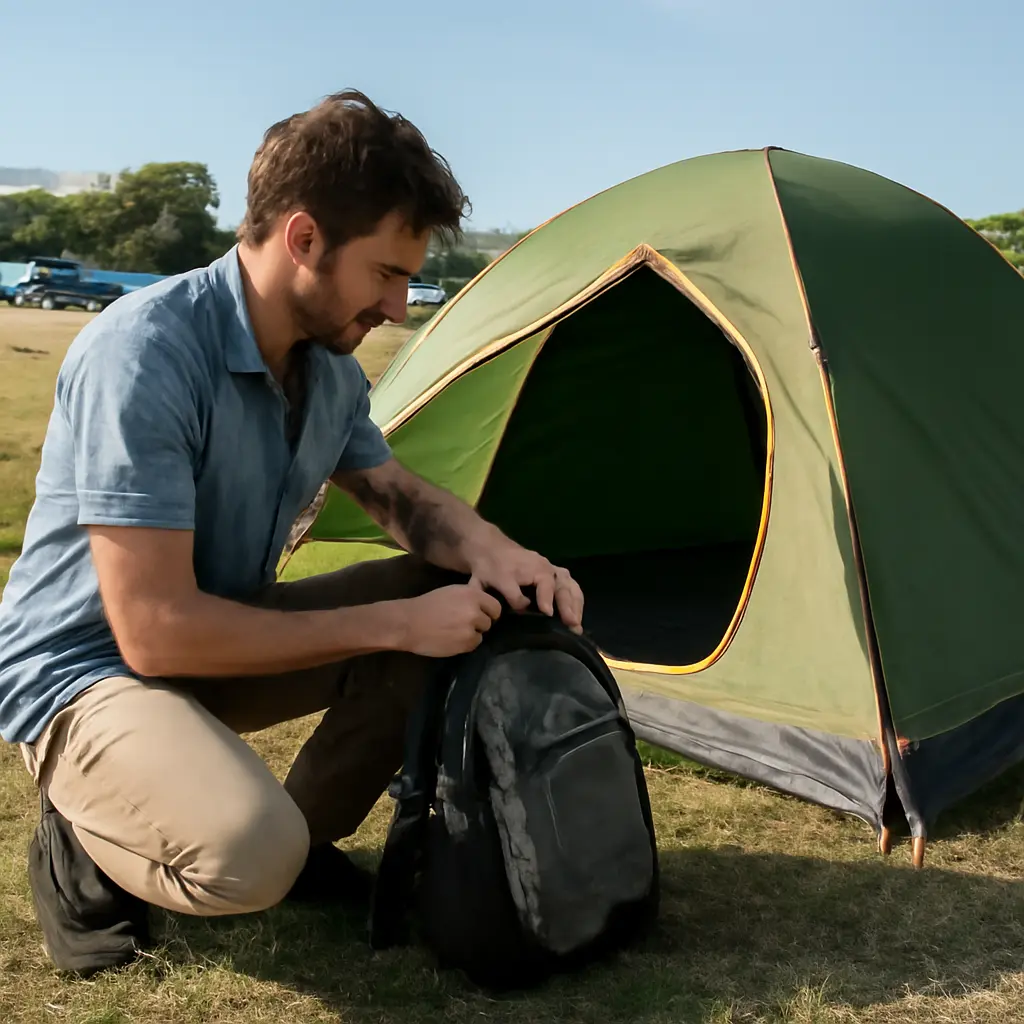
Seasoned festival travelers pack for flexibility, changing conditions, and easy access—not simply for the number of days away. Their approach treats a bag as a carefully chosen system: check the event’s rules first, prepare for weather and long periods on foot, keep essential items reachable, and avoid carrying gear that cannot serve more than one purpose. That matters at scale: A 2023 survey commissioned by the outdoor retailer REI found that 64% of respondents said spending time outdoors improved their mental health, while festival organizers routinely publish detailed restrictions on bags, water containers, and camping equipment. Experienced travelers use those constraints to pack lighter and more reliably, whether they are heading to a day festival, a multi-day campground, or an event involving air travel.
Festival packing priorities reflect experience and event conditions
Festival packing is the selection and arrangement of clothing, supplies, and personal gear for attending a music, arts, or cultural event. There is no single authoritative definition used across the industry, so the most useful working definition is practical: pack what the venue permits and what the traveler needs to stay comfortable, safe, and self-sufficient for the planned trip. The U.S. National Park Service’s guidance for outdoor recreation similarly emphasizes planning for conditions, carrying essentials, and preparing for changes in weather.
Seasoned travelers distinguish among festival types before making a list. A city concert may require a compact clear bag and transit-friendly essentials; a campground festival adds shelter, sleep, and hygiene needs; a fly-in event requires luggage that meets airline limits. The connecting principle is risk reduction: identify what the event supplies, what it prohibits, what could be difficult to replace, and what must remain accessible.
Rules-first packing prevents avoidable problems
Rules-first packing means checking the official event’s current permitted-items policy before buying or loading gear. Policies may specify bag dimensions, clear-bag requirements, refillable bottle sizes, prohibited umbrellas, camera equipment, medications, and campsite appliances. These are not universal standards: for example, Lollapalooza and other large events publish venue-specific bag and entry rules, and those rules can change between years or stages.
Experienced attendees save the policy on their phone and pack around it. They also separate necessities that require special handling—such as prescription medication, accessibility equipment, or medically required food—and check the event’s accommodation procedure rather than assuming standard entry rules apply. This reduces the chance of confiscation, delays, or having to leave useful gear behind.
A layered kit handles weather and long days
A layered kit uses adaptable clothing and protection instead of relying on one heavy outfit. A breathable base layer, an insulating layer, and a packable rain shell can handle temperature swings more effectively than a bulky coat. The National Weather Service advises people outdoors to account for heat, sun exposure, and changing weather; festival travelers can apply that advice by checking the forecast, bringing sun protection, and choosing footwear already tested on long walks.
The Centers for Disease Control and Prevention recommends taking steps to prevent heat-related illness, including staying hydrated, seeking shade, and limiting strenuous activity during extreme heat. At a festival, that translates into planning water access and rest breaks—not assuming that a bottle alone solves the problem. A lightweight hat, sunscreen, and an extra pair of socks often earn their space because they address common discomforts without adding much weight.
Festival bags balance access, capacity, and mobility
Bag strategy is the choice of carrying system, capacity, and item placement that lets a traveler move through security and the event without unnecessary strain. The International Air Transport Association notes that cabin-baggage allowances are set by individual airlines, not by one universal size rule. Festival venue limits are likewise event-specific. A seasoned traveler therefore chooses the bag only after checking both the event policy and the journey’s transport requirements.
The main bag categories are compact crossbody or clear bags for entry-controlled venues, small daypacks for events that permit them, and larger travel bags for camping or transport between locations. The useful distinction is not merely size: it is how quickly essential items can be reached and whether the bag remains comfortable after hours of walking.
Day bags keep high-use items within reach
A day bag carries items needed during the event, such as identification, payment method, phone, earplugs, sunscreen, and permitted water supplies. Seasoned attendees put frequently used items in predictable pockets, keep valuables secured against the body, and avoid filling every available space. A small bag is easier to manage in a crowd, but it should still fit the event’s published dimensions and any required clear-bag standard.
Ear protection is a particularly practical addition. The National Institute on Deafness and Other Communication Disorders warns that exposure to loud sound can damage hearing; its guidance identifies repeated or prolonged exposure to sound at or above 85 decibels as a hearing-risk concern. Concert levels can exceed that threshold, so reusable earplugs are a compact item with a meaningful protective purpose.
Packing cubes and dry bags make larger loads easier to manage
Packing cubes group clothing or equipment into distinct modules, while dry bags help protect selected contents from rain or spills. These tools are most useful for camping trips, where clean clothing, sleep gear, and wet-weather items need to stay separated. They do not create extra luggage allowance, and compression should not be used to force a bag beyond airline or event limits.
A practical arrangement places rain protection and a warm layer near the top, keeps clean sleepwear in a sealed compartment, and isolates damp items after use. Travelers can also prepare a small “first hour” pouch with a phone charger, toiletries, and one change of clothes so that a delayed arrival or inaccessible main bag does not derail the first night.
Festival essentials prioritize safety, comfort, and self-sufficiency
Festival essentials are the supplies that address foreseeable needs without duplicating services already provided onsite. Experienced travelers separate them into personal safety, hydration and health, sleep and hygiene, and shared campsite equipment. This category-based method is more reliable than packing from memory because it makes gaps visible before departure.
The bridge between personal essentials and campsite gear is the event’s actual level of support. A staffed venue with water stations and medical services calls for a different load than a remote campground. Check the official site for drinking-water availability, first-aid locations, charging options, food policies, and campsite facilities, then bring only what fills the remaining needs.
Hydration and health supplies should match the venue
A hydration plan combines permitted water-carrying equipment with knowledge of refill points and personal needs. The CDC advises people to drink more water in hot weather and not wait until they feel thirsty, while also noting that individual needs vary. Travelers should follow medical advice where relevant and review event rules before bringing bottles, hydration packs, or electrolyte products.
A small personal health kit can include prescribed medication in its original packaging, blister-care supplies, basic pain relief, and any personally necessary items. The Food and Drug Administration advises keeping medicines properly labeled and stored according to their instructions. For medication that needs refrigeration or special access, contact the organizer in advance rather than relying on improvisation at the gate.
Camping gear focuses on shelter and dependable sleep
Camping gear is equipment used to sleep and function at an overnight festival site, typically including a tent, sleeping system, lighting, and weather protection. Seasoned campers prioritize a tent they have already set up, a sleeping pad suited to the ground, and a headlamp with working batteries. They also check campsite rules for tent dimensions, stakes, cooking equipment, and prohibited fuel or appliances.
The U.S. National Park Service recommends preparing for outdoor conditions and carrying appropriate supplies; festival campsites may be more developed than backcountry sites, but weather and uneven ground still matter. A real-world example is a rainy multi-day event: a tested rainfly, groundsheet, and dry clothing stored separately can protect sleep and reduce the need to replace soaked gear. A compact towel and a small rubbish bag also make cleanup easier without requiring a large hygiene kit.
Shared equipment reduces duplication in groups
Shared equipment is gear assigned to a group rather than carried by every person. A simple division can allocate one person to bring a first-aid kit, another to bring a lantern, and another to manage shared cooking or cleanup supplies—if the event permits them. This prevents multiple heavy duplicates while ensuring the group does not mistakenly assume someone else has packed a critical item.
Before departure, groups should confirm who owns each item, who transports it, and what happens if plans change. This is especially useful when travelers arrive at different times or use different vehicles. Shared lists can be stored digitally, but one person should still verify that the gear is physically packed.
Experienced travelers pack lighter by planning for contingencies
Lightweight festival packing is not simply taking fewer things; it is keeping items that cover likely needs and removing low-value duplicates. A useful test is whether an item is required, difficult to obtain, or capable of serving more than one purpose. The Federal Emergency Management Agency’s emergency-preparedness guidance similarly emphasizes planning for needs and assembling supplies in advance, although a festival kit should be tailored to the event rather than copied wholesale from an emergency kit.
A compact decision rule is to pack by scenario: entry and navigation, weather, health, sleep if camping, and the trip home. Once each scenario is covered, remove backup items that do not address a distinct risk. The aim is a bag that remains usable after a long day, not a portable store of every possible convenience.
A checklist catches omissions before departure
A checklist is a written or digital inventory organized by use, rather than a loose collection of reminders. A seasoned traveler checks identification and tickets first, then medication, weather layers, water access, phone power, and transport-specific requirements. For campers, the list adds shelter, sleep gear, toiletries, and campsite rules.
The checklist should be compared with the official event policy shortly before departure because rules and logistics can change. For air travel, confirm the airline’s current baggage allowance and restrictions; for ground travel, consider how far the bag must be carried from parking or transit. These checks turn packing from guesswork into a repeatable process.
A tested pack beats a last-minute load
A test pack means loading the bag before travel, wearing or carrying it, and checking that essential items are reachable. This reveals awkward weight distribution, uncomfortable straps, missing rain protection, and gear that does not fit. For camping equipment, a trial setup at home can uncover missing tent poles or unfamiliar instructions while there is still time to fix the problem.
After the event, travelers can improve the next trip by recording what remained unused, what failed, and what they had to borrow or buy. That feedback loop is how experienced festivalgoers become more selective: they keep reliable essentials, replace ineffective gear, and adapt the kit to the next venue rather than repeating the same overpacking habits.
Conclusion: Festival packing works best as a flexible system
Seasoned festival travelers pack differently because they begin with venue rules, choose a bag around access and mobility, and prioritize safety, hydration, weather protection, and sleep according to the event. They use checklists, shared gear plans, and test packs to avoid both missing essentials and carrying unnecessary weight. Before the next festival, review the organizer’s current guidance, check the forecast and transport limits, and build a compact kit around the conditions you will actually face.
Sources: REI Co-op, 2023 Outdoor Participation Trends Report, https://www.rei.com/newsroom/article/2023-outdoor-participation-trends-report; Lollapalooza, Festival Information and Allowed Items, https://www.lollapalooza.com/information; National Park Service, Ten Essentials, https://www.nps.gov/articles/10essentials.htm; National Weather Service, Heat Safety, https://www.weather.gov/safety/heat; Centers for Disease Control and Prevention, About Heat and Your Health, https://www.cdc.gov/heat-health/about/index.html; International Air Transport Association, Cabin OK Baggage, https://www.iata.org/en/programs/ops-infra/baggage/check-bag/; National Institute on Deafness and Other Communication Disorders, Noise-Induced Hearing Loss, https://www.nidcd.nih.gov/health/noise-induced-hearing-loss; U.S. Food and Drug Administration, Where and How to Dispose of Unused Medicines, https://www.fda.gov/consumers/consumer-updates/where-and-how-dispose-unused-medicines; Federal Emergency Management Agency, Build A Kit, https://www.ready.gov/kit.


