Festival etiquette is the shared practice of enjoying music, art, and community while respecting other people’s safety, access, space, and boundaries. It need not dampen the fun: clear communication, awareness of the crowd, and small acts of care can help everyone have a better experience. That matters at events where thousands of people share tightly packed areas; the UK Health and Safety Executive, for example, advises organizers to assess crowd movement, density, entry, and exit rather than treating a crowd as a static mass. This guide explains how respect works in shared festival spaces, from personal boundaries and accessibility to noise, waste, consent, and practical ways to keep the atmosphere welcoming.
Festival etiquette protects shared space and collective enjoyment
Festival etiquette is not a single formal code. It is a set of considerate behaviors that help people use a crowded event together, including giving others room, following site guidance, asking before touching or photographing someone, and responding calmly when needs conflict. The principle is simple: your enjoyment should not depend on making someone else feel unsafe, excluded, or unable to enjoy the event.
The scale of the setting makes these choices consequential. The Health and Safety Executive describes crowd safety as a matter of planning for how people arrive, move, gather, and leave. Its guidance highlights crowd density and movement as factors to manage, particularly where bottlenecks or restricted exits could develop. For attendees, that translates into practical habits: avoid blocking walkways, follow stewards’ directions, and do not push against the flow of a crowd.
The subtopics are closely connected. Personal space and consent shape how people interact; accessibility and inclusion determine who can participate; crowd awareness and care help prevent harm; and environmental etiquette keeps shared grounds usable. Treating these as parts of one culture makes respect feel less like a list of rules and more like the groundwork for a good time.
Respectful festival behavior balances personal freedom with shared space
Shared-space respect means using an area without unnecessarily limiting other people’s safety, comfort, or access. There is no universal distance that counts as personal space in every crowd, so the most reliable cues are situational: notice people’s reactions, leave room where possible, and adjust when someone signals discomfort. Festival etiquette includes physical boundaries, consent, accessibility, and considerate movement—not just politeness.
Several related practices fall under this broader idea: consent-aware interaction, crowd-conscious positioning, inclusive access, considerate celebration, and low-impact site use. The best response is often a small one. Step aside to let someone pass, lower a phone that is obstructing a view, or ask before joining a group’s space. These gestures preserve the atmosphere precisely because they address friction without turning every moment into a confrontation.
Personal space means noticing and responding to cues
Personal space is the physical and social room a person needs to feel comfortable. In a packed audience, close proximity may be unavoidable, but deliberate pushing, leaning on strangers, or repeatedly entering someone’s space after they move away is not. Look for cues such as a person stepping back, turning away, or asking for room, and give them space when you can.
Crowds also have movement patterns. The Health and Safety Executive’s crowd guidance emphasizes that density and flow affect safety, especially at entrances, exits, and pinch points. If movement becomes uncomfortable, avoid pushing against the crowd; move with the flow toward a steward or a less dense area when it is safe to do so.
Consent applies to touch, conversation, and photography
Consent is a freely given, specific, and ongoing agreement. In festival settings, that principle applies not only to sexual contact but also to hugs, dancing together, joining a conversation, or taking and sharing identifiable photos. Ask first when practical, respect a no or hesitation, and do not treat a friendly atmosphere or revealing clothing as permission.
RAINN, a U.S. nonprofit focused on preventing sexual violence, explains consent as clear, voluntary, and reversible. That is a useful standard for everyday festival interactions: agreement to one thing does not mean agreement to another, and someone can change their mind. If a person is too impaired to make a clear choice, do not pursue intimate contact.
Accessibility is a shared responsibility
Accessibility means making it possible for people with different disabilities and support needs to participate. Attendees can help by keeping marked routes and viewing areas clear, not occupying accessible facilities without need, and asking before offering assistance. A mobility aid, service animal, or access space is not a convenient place to rest belongings or stand for a better view.
The World Health Organization estimates that 1.3 billion people—about 16% of the global population—experience significant disability. That figure underscores why access should be treated as a normal part of planning and public behavior, not as a rare exception. Follow the event’s access guidance and, if unsure how to help, ask respectfully rather than taking control.
Crowd-aware choices keep the festival atmosphere safer
Crowd awareness is the practice of noticing how your actions affect movement and the people around you. It connects individual etiquette to event safety: a group stopping in a narrow route, an unattended bag in a walkway, or a sudden push can create problems beyond the immediate interaction. Organizers and stewards manage the overall site, but attendees can make safer choices by staying alert and following instructions.
Choose positions that do not block movement or access
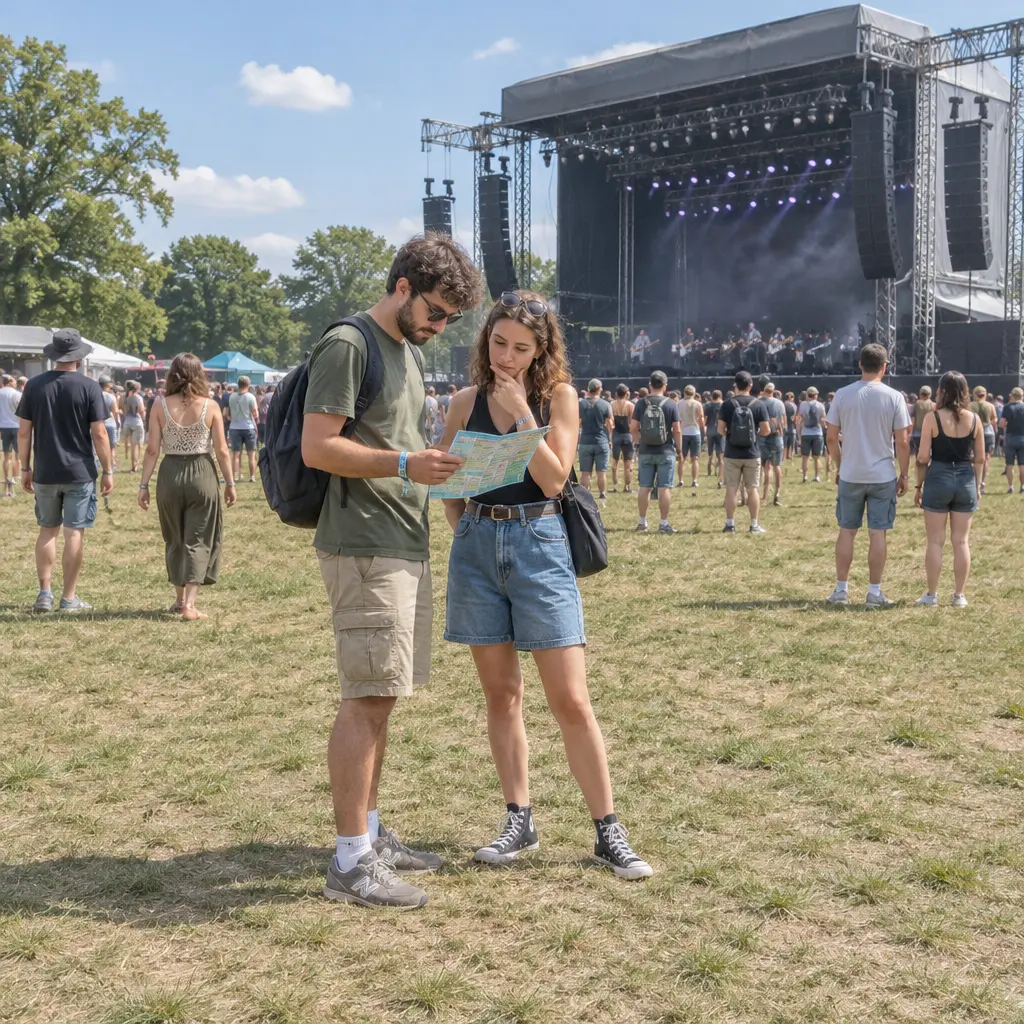
A good viewing spot is one that lets you enjoy the show without obstructing other people’s routes or access. Keep entrances, exits, emergency routes, and marked accessible areas clear. If you need to pause, regroup, or check a map, move to the side of a path rather than stopping in its center.
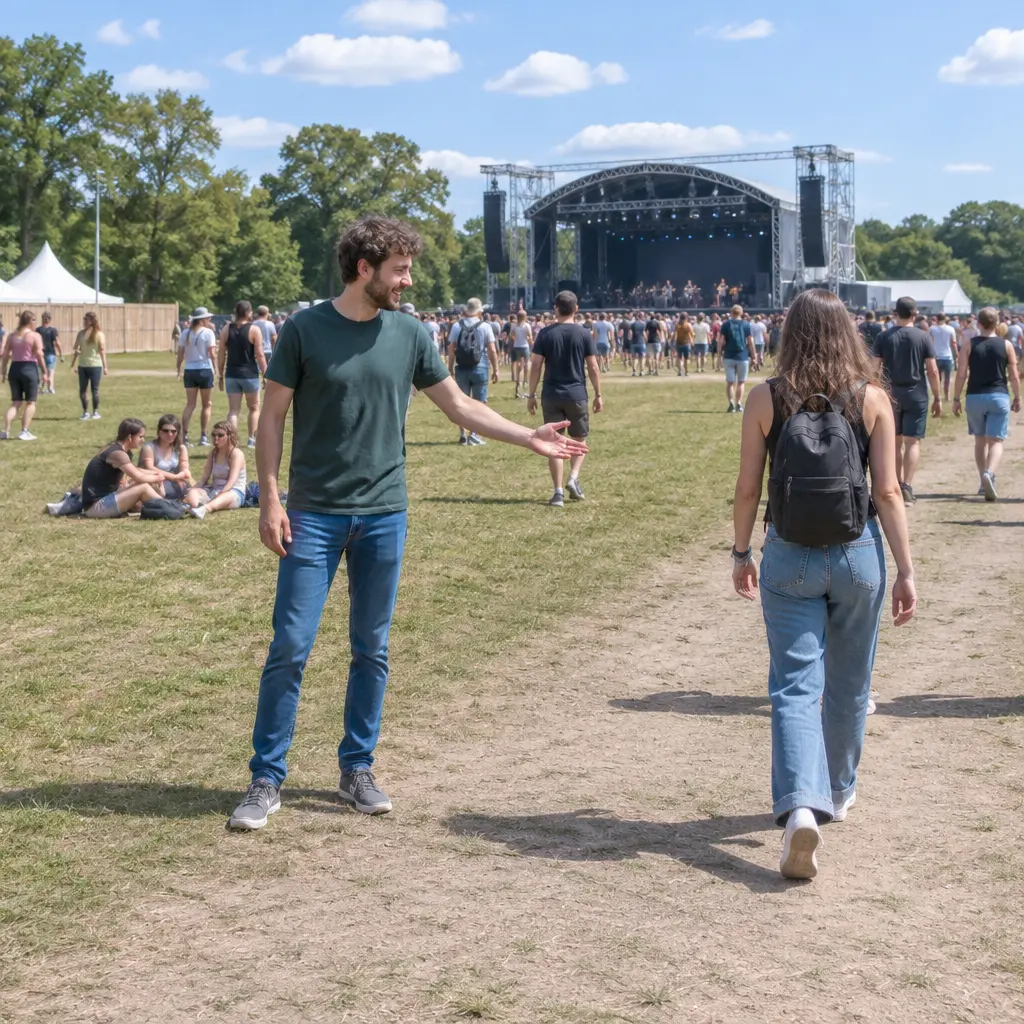
At a stage, avoid forcing your way forward through a dense audience. If you lose your group, agree on a meeting point away from a bottleneck instead of searching while pushing through the crowd. These choices reflect the Health and Safety Executive’s emphasis on managing crowd flow and preventing congestion at key points.
Look after friends without taking away their agency
Looking out for friends means staying attentive while respecting their choices. Agree on a meeting point, check that everyone has a way to get home, and offer water or a quieter place if someone appears overwhelmed. Do not leave an incapacitated person alone; contact event staff or medical services if they need help.
The U.S. Centers for Disease Control and Prevention identifies confusion, dizziness, nausea, and fainting among signs of heat-related illness. If someone seems seriously unwell, seek medical assistance promptly and follow staff guidance. This is a practical form of festival solidarity: help early, avoid crowding the person, and let trained responders take the lead.
Respect staff directions and emergency procedures
Stewards, security teams, and medical personnel help implement the event’s safety plan. Follow their instructions even when the reason is not immediately visible; they may be responding to a hazard or managing a developing crowd issue. Do not obstruct emergency vehicles or argue in a way that delays assistance.
If you notice an immediate danger, report it to event staff or the appropriate emergency service rather than relying only on social media. Give concise information about what is happening and where. A calm, specific report is more useful than speculation that could spread confusion.
Inclusive celebration makes room for different needs and cultures
Inclusion at a festival means recognizing that people may experience the same sound, space, heat, and social environment differently. A lively crowd can be welcoming, but not everyone wants to be touched, photographed, shouted at, or pulled into a dance. Respectful celebration leaves room for people to participate on their own terms.
Celebrate enthusiastically without imposing on others
Enthusiasm is part of festival culture; imposing it on others is not. Dance with awareness of nearby people, avoid swinging objects or drinks into others, and keep flags or signs from blocking views for long periods. If someone asks you to move or lower something, respond without turning a small request into a dispute.
Consider the scale of the space. A movement that feels harmless in an open field may become disruptive in a tightly packed audience. Matching your behavior to the density around you helps preserve the energy while reducing the risk of accidental contact or blocked sightlines.
Treat cultural expression with curiosity and care
Cultural respect means approaching clothing, symbols, rituals, and performances without treating them as costumes or props. If you do not understand the meaning of an item or practice, ask politely when the moment is appropriate—or simply observe without demanding an explanation. Avoid touching cultural or religious objects without permission, and do not make someone responsible for educating you while they are attending the event.
A festival can bring together people with different languages, traditions, and expectations. Courtesy does not require perfect knowledge of every culture; it does require listening, avoiding assumptions, and correcting your behavior when someone explains that it has caused harm.
Low-impact habits protect the festival site
Environmental etiquette is the practice of enjoying an event while limiting damage to its grounds and resources. It is part of shared-space respect because other attendees, workers, local residents, and future visitors may all be affected by waste, noise, and damage to natural areas.
Reduce waste and use the site’s facilities
Use the bins and recycling stations provided, take reusable items where the event allows them, and do not leave cans, food, or equipment behind. Keep food and drink away from electrical equipment and follow rules about containers. If a bin is full, find another designated point rather than leaving rubbish beside it.
The U.S. Environmental Protection Agency reported that the United States generated 292.4 million tons of municipal solid waste in 2018, with 69 million tons recycled and 25 million tons composted. Those national figures are not festival-specific, but they show why waste prevention and correct sorting matter in everyday settings as well as at large events.
Keep noise and nighttime movement considerate
Sound is central to many festivals, but consideration still matters outside performance areas. Use headphones in quiet zones, keep conversations and speakers at a reasonable level around campsites, and follow posted quiet hours. When leaving late, move calmly and avoid shouting near sleeping neighbors or nearby homes.
Where events provide quiet or low-stimulation spaces, treat them as purposeful access resources rather than social hangouts. A quieter area can help attendees who are overwhelmed, fatigued, or sensitive to sound recover and continue participating.
Conclusion: Respect keeps the shared festival experience alive
Festival etiquette is the everyday practice of balancing personal freedom with shared space. Personal boundaries and consent guide interactions; accessibility and inclusion help more people participate; crowd awareness and care support safety; and low-impact habits protect the site. Together, these practices help preserve the energy of a festival without asking anyone to sacrifice dignity or access for the sake of the vibe.
Before your next event, check its access, safety, and waste guidance, agree on a meeting point with your group, and stay attentive to the people around you. If something feels unsafe or someone needs help, alert event staff. Respect is not a mood-killer—it is how a shared celebration stays welcoming.
Sources: UK Health and Safety Executive, Managing Crowds Safely: A Guide for Organisers at Events and Venues, https://www.hse.gov.uk/pubns/priced/hsg154.pdf; RAINN, What Is Consent?, https://rainn.org/articles/what-is-consent; World Health Organization, Disability, https://www.who.int/news-room/fact-sheets/detail/disability-and-health; U.S. Centers for Disease Control and Prevention, Heat-Related Illnesses, https://www.cdc.gov/niosh/heat-stress/about/illnesses.html; U.S. Environmental Protection Agency, National Overview: Facts and Figures on Materials, Wastes and Recycling, https://www.epa.gov/facts-and-figures-about-materials-waste-and-recycling/national-overview-facts-and-figures-materials.