Festival lineup strategy is the design of an event’s artist schedule to create a compelling experience across the whole bill, not merely to assemble the biggest names. A synergistic lineup pairs artists whose sounds, audiences, set times, and performance styles complement one another. That approach matters in a live-music market where festivals compete for ticket buyers, sponsors, and artists: Pollstar’s 2024 year-end reporting placed the top 100 worldwide festivals’ combined attendance at about 7.6 million, underscoring the scale of the opportunity—and the risk of treating each booking as an isolated star-power decision. This article explains how to assess artist synergy, balance audience reach with discovery, sequence performers, and evaluate results using practical metrics and real-world programming examples.
Artist synergy shapes festival lineup strategy
Artist synergy is the degree to which performers strengthen one another’s value within a festival through musical compatibility, audience overlap, contrast, shared cultural context, or complementary live-show qualities. It is not a formal industry standard with one universally accepted formula. In practical event planning, it is a portfolio concept: book the set of acts that produces the strongest combined experience rather than selecting each artist solely by individual popularity.
The distinction is important because a lineup is experienced as a sequence and a place, not as a list of names. A headliner may drive awareness, while mid-bill performers extend the day, introduce new sounds, and give attendees reasons to move between stages. The strongest program connects these functions, while still allowing enough variety to serve different tastes.
Musical compatibility and productive contrast
Musical compatibility means that artists share enough sonic or cultural reference points to make the transition between sets feel intentional. Compatibility can come from genre, instrumentation, era, lyrical themes, or performance energy. Productive contrast, by comparison, places distinct styles beside one another in a way that broadens the audience’s experience without making the schedule feel arbitrary.
For example, a festival might connect an indie-rock act with a roots-oriented songwriter through guitar-led arrangements and storytelling, then shift to an electronic performer whose set offers a deliberate change in pace. The booking question is not simply whether the artists sound alike; it is whether the relationship between their sets gives attendees a satisfying reason to stay, explore, or return.
Audience overlap and audience expansion
Audience overlap describes the degree to which two acts attract similar listeners. Audience expansion occurs when a familiar artist helps introduce a less-known performer to some of those listeners. Both are useful, but excessive overlap can make a lineup feel repetitive, while too little connection can weaken the festival’s identity.
Promoters can estimate overlap using ticketing and customer data, past event attendance, streaming-audience geography, social engagement, and surveys. These are indicators rather than direct proof of shared festival attendance: a monthly listener count, for instance, does not reveal how many people will travel, buy a ticket, or watch a full set. The useful measure is how evidence from several sources combines to inform a booking decision.
Lineup identity as a portfolio
A festival lineup behaves like a portfolio when different acts contribute different forms of value: ticket demand, genre credibility, local connection, emerging talent, and discovery. A balanced portfolio avoids relying on a single artist or genre to carry the event. It can also help the festival remain recognizable from year to year while refreshing its offerings.
The audience-development principle is supported by broader participation research. In the National Endowment for the Arts’ 2022 Survey of Public Participation in the Arts, 49.8% of U.S. adults reported attending a performing-arts event in person during the previous 12 months. That national figure covers multiple art forms and is not a festival-specific attendance rate, but it illustrates the breadth of potential live-event audiences and the value of making programs accessible beyond a narrow fan base.
Booking decisions connect artist synergy to measurable demand
Once a festival has defined its artistic identity, booking decisions translate that identity into a program. A practical evaluation separates an artist’s individual draw from the added value they bring alongside other performers. This makes it easier to compare a major act with a lower-cost artist who may strengthen a specific audience segment, improve stage flow, or make the overall bill more coherent.
Star power, draw, and the limits of billing position
Star power is an artist’s ability to attract attention and demand, often reflected in ticket sales, media visibility, streaming reach, touring history, and name recognition. It matters: a widely recognized headliner can help sell tickets and secure press attention. But these indicators do not fully capture how an act performs within a particular festival, market, date, or audience mix.
A booking team should therefore test a headliner’s expected value against costs and constraints: guarantee, production requirements, exclusivity terms, travel logistics, and schedule impact. Pollstar’s year-end Boxoffice reporting is one industry reference for touring activity and reported grosses, but those figures should be treated as historical evidence, not a guaranteed forecast for a festival engagement. Local presales, audience research, and comparable events provide necessary context.
Genre bridges and discovery acts
A genre bridge is an artist or set of artists that links two audience communities. A discovery act is a performer a meaningful share of attendees may not yet know but could enjoy when presented in a fitting context. Pairing an emerging soul performer with an established R&B act, for example, can make the newer artist easier to sample while giving the stage a clear musical thread.
Discovery works best when it is supported by practical presentation: an appropriate stage, a visible set time, clear schedule information, and enough space for a full performance. The goal is not simply to place a developing act below a famous name; it is to make the connection legible to the audience. Promoters can measure this through set attendance, audience surveys, post-event listening engagement where available, and repeat attendance at subsequent editions.
Local and regional acts as audience connectors
Local and regional artists can connect a festival to its host community, bring committed nearby audiences, and distinguish a bill from touring packages that look similar across markets. Their value may include cultural relevance and community relationships as well as direct ticket demand.
This approach should be designed rather than treated as a token booking. Organizers can build meaningful placement for local performers, coordinate promotion with community partners, and ensure production standards support the act’s performance. A regional artist can also bridge styles across the schedule—for example, linking a city’s independent scene to a larger national genre community.
Scheduling turns artist synergy into a live experience
A coherent bill can still underperform if its schedule creates avoidable clashes, long gaps, or abrupt changes in energy. Scheduling converts artistic relationships into attendee decisions: which stage to visit, whether to stay for the next set, and how to move around the site. As a result, stage design and set times are strategic parts of lineup planning, not merely operational details.
Set sequencing and energy arcs
Set sequencing is the order in which performers appear. An energy arc is the planned progression of intensity, mood, or scale across a stage or festival day. A common sequence builds from developing or lower-intensity performances toward more prominent evening sets, but variety can prevent fatigue and create memorable transitions.
For instance, a schedule may move from an intimate acoustic set to a rhythmic band and then to a high-energy headliner. The transition should account for changeover time, sound checks, stage capacity, and the audience’s ability to move between areas. A useful planning graphic would map artist energy and audience overlap by time slot, showing where the program builds naturally and where a transition needs attention.
Stage conflicts and audience flow
A stage conflict occurs when acts appealing to similar audiences perform simultaneously. Some overlap is unavoidable, particularly at multi-stage festivals, but high-conflict scheduling may force attendees to miss part of a set or choose between artists they expected to see. Conversely, pairing dissimilar acts at the same time may distribute crowds more evenly, provided both stages remain attractive.
Organizers can use ticket-buyer surveys, prior attendance patterns, stage-capacity plans, and real-time crowd observations to assess the trade-off. Crowd size alone is not a complete success measure: a smaller stage may be appropriately full, while an overcrowded area can create safety and comfort concerns. Capacity management and accessible routes should inform scheduling alongside audience demand.
Set length, transitions, and attendee stamina
Set length and changeover design affect both the artist’s presentation and the audience’s energy. Shorter sets can create a fast-moving discovery program; longer sets can give headliners room to develop a performance. Neither format is automatically superior. The right choice depends on the festival’s format, production capabilities, artist agreements, and audience expectations.
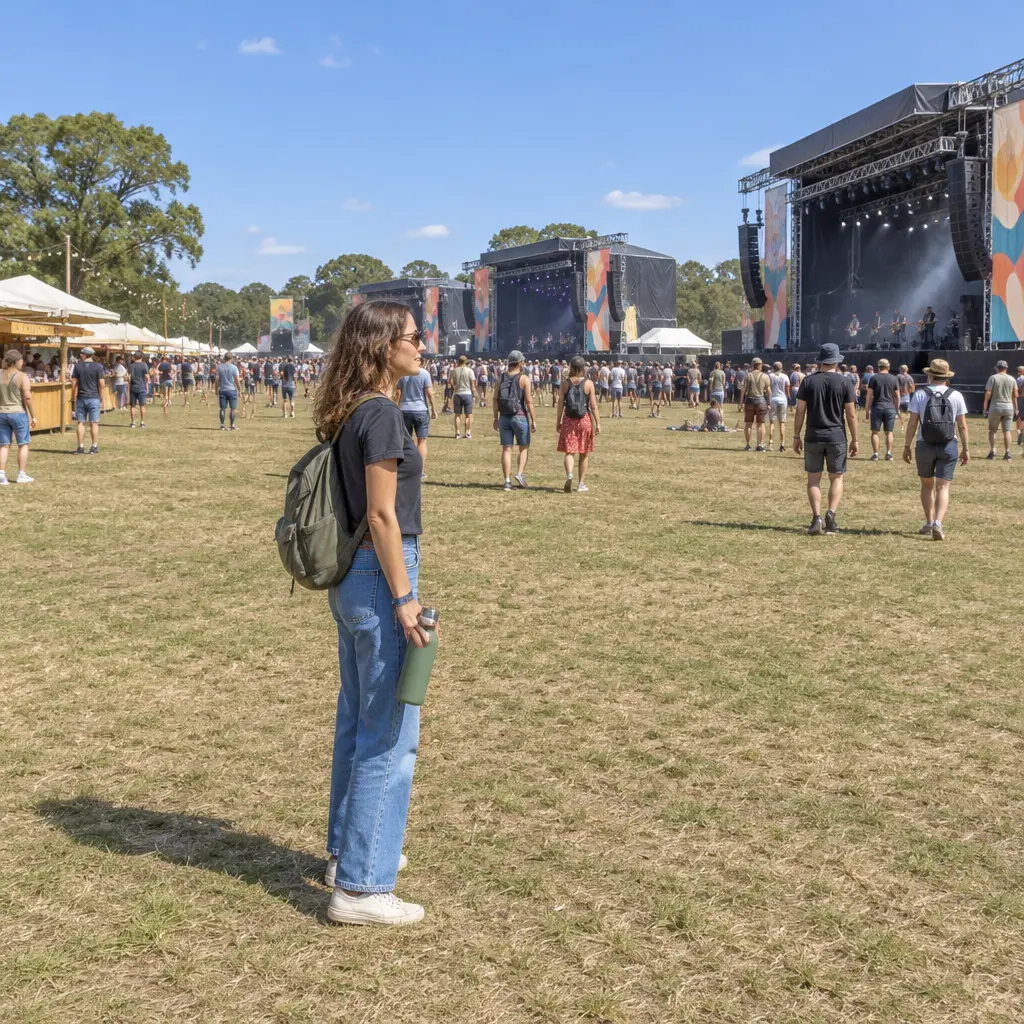
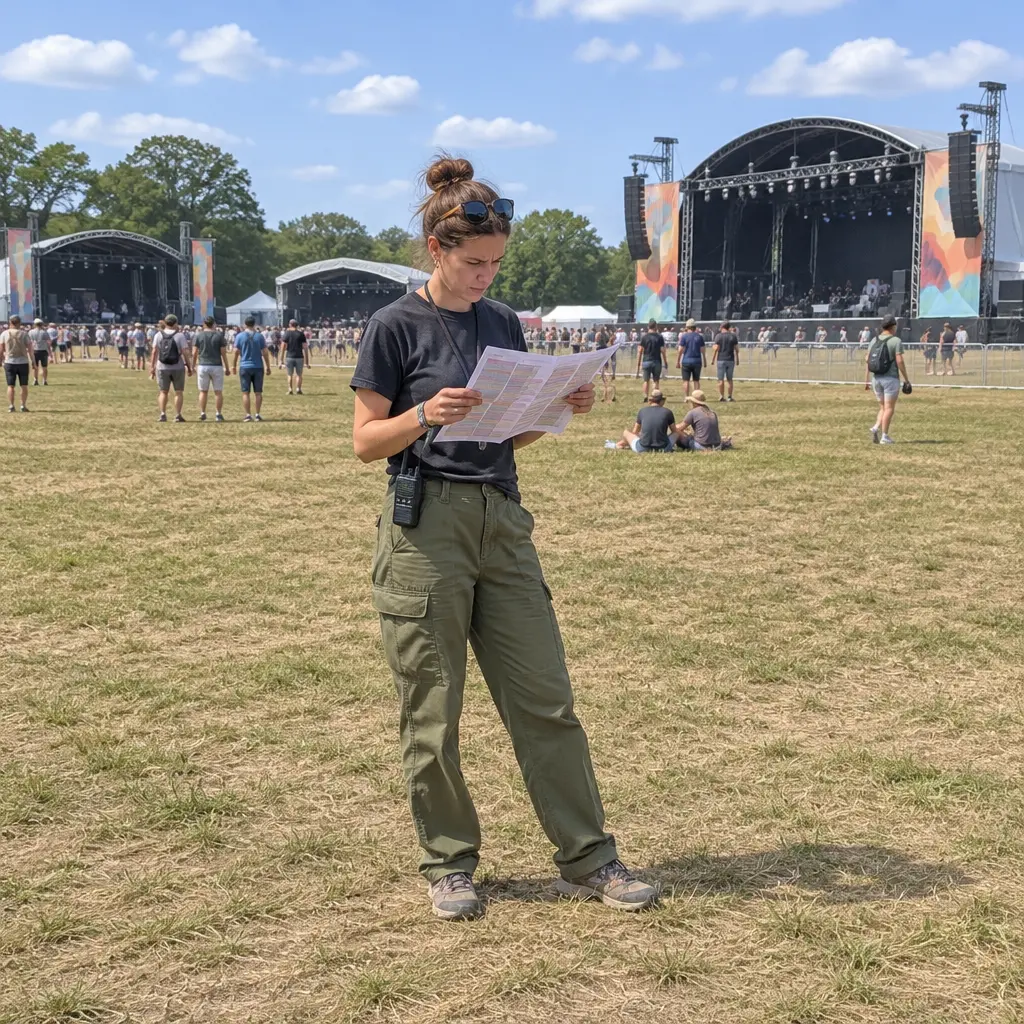
A balanced day also accounts for food, water, shade, seating, toilets, and accessible viewing. These facilities are not substitutes for good programming, but they shape whether attendees can comfortably remain on site long enough to experience it. The schedule should be tested against realistic walking times and crowd movement, not only against the printed timetable.
Festival lineup strategy improves through evidence and evaluation
Artist synergy is a planning hypothesis that should be tested before and after the event. Combining audience research, financial modeling, programming judgment, and operational feedback helps organizers learn whether the intended connections were visible and valuable to attendees.
Pre-event audience and market research
Pre-event research identifies likely audiences, competing events, travel patterns, preferred genres, and barriers to attendance. Promoters can use customer databases, short surveys, focus groups, social listening, local market reports, and presale behavior. Each method has limitations: online engagement may overrepresent highly active fans, and stated intent does not always become a ticket purchase.
The most useful analysis compares multiple signals and segments them by geography, past attendance, and ticket type. It can then inform questions such as whether to add a genre bridge, adjust a stage’s capacity, invest in a developing act, or avoid scheduling two audience-heavy performers at once.
A practical synergy scorecard
A synergy scorecard is a decision aid, not a substitute for artistic judgment. Teams can rate each proposed act against a consistent set of criteria, such as:
- Expected ticket demand and evidence quality.
- Fit with the festival’s identity and audience promise.
- Musical or cultural connection to other booked acts.
- Potential to introduce a new audience or support discovery.
- Stage and schedule fit, including production needs.
- Cost, contractual terms, and financial risk.
A weighted model can make trade-offs transparent: for example, a festival prioritizing discovery may assign more weight to artistic fit and audience expansion, while a new event may emphasize proven demand and financial resilience. Teams should record assumptions and revisit them after the festival rather than presenting a score as an objective prediction.
Post-event metrics and learning
Evaluation should combine commercial, audience, and operational measures. Relevant indicators include ticket conversion by announcement phase, attendance by day, set and stage observations, survey responses, satisfaction, repeat-purchase intent, and reported incidents or access issues. Where privacy rules and consent allow, ticketing and engagement data can help distinguish first-time attendees from returning customers.
Metrics should be interpreted in context. A high-attendance set may reflect a headliner’s fame, a convenient time slot, or a capacity-limited stage. A lower-attendance performance might still have strengthened the festival’s identity or earned strong audience feedback. Comparing planned outcomes with observed results helps refine future programming instead of rewarding star power by default.
Real-world programming illustrates complementary value
Multi-genre festivals such as Glastonbury demonstrate how a broad event identity can accommodate distinct scenes across stages, while genre-focused gatherings such as jazz or country festivals create a tighter musical frame for deep audience affinity. These formats show that synergy does not require every artist to sound alike. It requires a clear curatorial logic that attendees can understand, whether that logic is breadth, community, genre depth, or a combination.
A useful case-study method is to examine a festival’s announced bill, stage schedule, ticketing disclosures, and post-event reporting together. Ask whether the headliners align with the event’s identity, whether supporting acts create credible bridges, whether developing and local performers receive meaningful placement, and whether simultaneous sets impose avoidable choices. Publicly available reporting often does not isolate the causal effect of one booking, so conclusions should be framed as informed analysis rather than proof that a particular pairing caused attendance or revenue.
Conclusion: build the bill as a connected experience
Effective festival lineup strategy treats artist synergy as a complement to individual draw. Musical compatibility, productive contrast, audience overlap, discovery, and local connection help define the bill; booking analysis balances those qualities against demand and cost; scheduling turns them into a day attendees can navigate; and post-event evaluation tests what worked.
For organizers, the practical next step is to map each proposed act’s role before confirming the lineup, then review stage conflicts and success measures as one connected plan. For attendees and industry observers, looking beyond headliner announcements can reveal the curatorial choices that make a festival distinctive. Further reading from Pollstar and the National Endowment for the Arts can add context on live-event markets and arts participation.
Sources: Pollstar, 2024 Year End Business Analysis, https://news.pollstar.com/2024/12/16/2024-year-end-business-analysis/; National Endowment for the Arts, 2022 Survey of Public Participation in the Arts, https://www.arts.gov/impact/research/publications/2022-survey-public-participation-arts; Pollstar, Boxoffice, https://www.pollstar.com/Chart/2024/12/Top100WorldwideTours_958.pdf; Glastonbury Festival, Line-up, https://www.glastonburyfestivals.co.uk/line-up/